When Should I Replace My Furnace?
A furnace usually gives you warning before it fails completely. The problem is that many homeowners wait until they have no heat on a cold Calgary morning, then get forced into a fast decision. If you’re asking, when should I replace my furnace, the right answer depends on age, repair history, safety, efficiency, and how reliably the system is heating your home now.
When should I replace my furnace instead of repairing it?
Replacement makes more sense when the furnace is no longer dependable, no longer efficient, or no longer worth the repair investment. A single repair does not mean the system is finished. Repeated breakdowns, rising heating bills, uneven heat, and major component failures are a different story.
Most furnaces last around 15 to 20 years with proper maintenance. Some run longer, but age alone increases risk. Parts wear down, heat exchangers weaken, burners get dirtier, motors lose efficiency, and control components become less reliable. If your furnace is in that age range and starting to fail more often, replacement is usually the smarter long-term move.
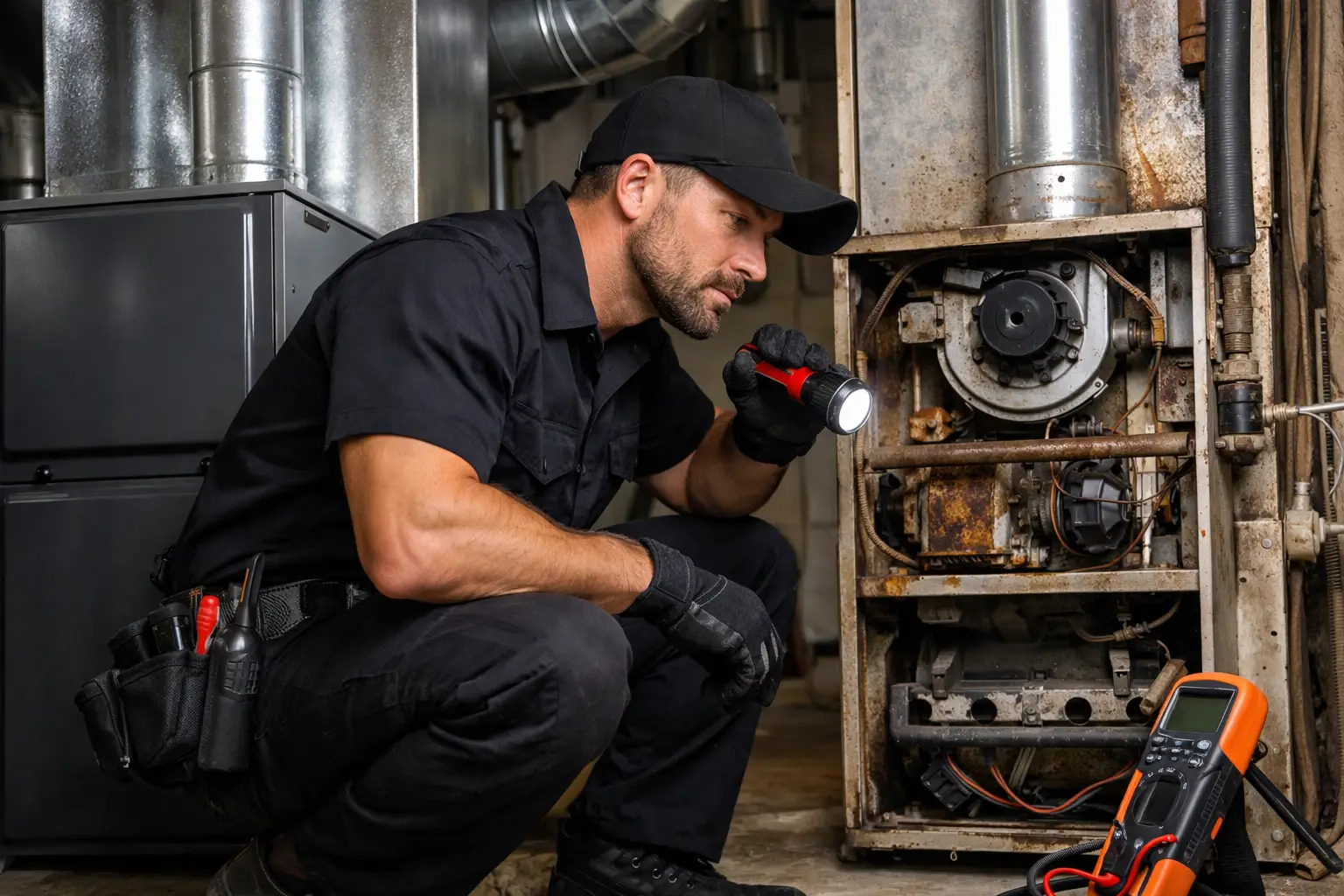
A good service technician looks at the full picture, not just the current symptom. That means checking system condition, airflow, combustion performance, safety, and whether the repair cost makes sense compared to the remaining life of the unit.
The biggest signs your furnace is near the end
Your furnace is 15 to 20 years old
Age is one of the clearest signals. Once a furnace gets into the later part of its service life, you are more likely to face emergency repairs during peak heating season. Even if it still runs, it may be operating less efficiently and putting more strain on aging parts.
For homeowners planning ahead, replacing an older furnace before a full breakdown can prevent downtime, rushed installation decisions, and winter emergency calls.
Repairs are becoming frequent
One ignition issue or one motor repair does not automatically justify replacement. But if you are calling for service every heating season, the pattern matters. Frequent repairs usually mean the system is wearing out as a whole, not just suffering from one isolated problem.
This is especially true if major components are involved, such as the blower motor, control board, inducer motor, gas valve, or heat exchanger. At that point, continuing to repair an old furnace can turn into a cycle of short-term fixes with no real reliability.
Your energy bills keep climbing
An older furnace often has to run longer to produce the same result. That translates into higher utility bills, especially during long Calgary winters. If your usage habits have not changed but heating costs keep rising, furnace efficiency may be part of the problem.
Not every high bill means replacement is necessary. Dirty filters, duct problems, thermostat issues, and lack of maintenance can also reduce performance. But when an aging furnace is both inefficient and unreliable, replacement often delivers better value than continued repair.
Heating is uneven or the system struggles to keep up
If some rooms stay cold, the furnace runs constantly, or the house never feels consistently comfortable, the system may be undersized for current demand, losing capacity, or suffering from internal wear. In some cases, the issue is duct-related. In others, the furnace itself is no longer delivering stable performance.
A proper diagnosis matters here. Replacing a furnace only makes sense when the furnace is the actual problem. Accurate testing prevents wasted money and gets to the real cause.
The furnace is making new or worsening noises
Older furnaces often get louder as parts wear down. Rattling, banging, humming, screeching, or rumbling can point to mechanical issues that should not be ignored. Some noises come from loose panels or minor airflow problems. Others signal component wear that can lead to a no-heat breakdown.
When those sounds show up in an older system with a repair history, replacement becomes a serious consideration.
There are safety concerns
Safety issues change the conversation quickly. If a furnace has combustion problems, venting issues, or a cracked heat exchanger, replacement may be the safest and most practical path. This is not an area for guesswork.
A licensed journeyman technician should inspect the unit, confirm the condition, and explain whether repair is possible and appropriate. Code-compliant workmanship and proper diagnosis matter most when gas appliances are involved.
When repair still makes sense
Not every furnace problem means you need a new system. If the furnace is newer, has been maintained properly, and the issue is isolated, repair is often the right call. A well-built system with years of service life left should not be replaced just because of one failed part.
Repair usually makes sense when the unit is under 12 years old, the repair cost is reasonable, and the furnace has a strong performance history. If airflow, combustion, and overall condition are still solid, restoring the system can be the most cost-effective option.
This is where honest diagnostics matter. You need to know whether the problem is temporary or part of a larger pattern.
The repair-versus-replace decision
A practical way to look at it is this: if the furnace is old and the repair is expensive, replacement deserves serious consideration. If the furnace is newer and the problem is limited, repair is usually the better move.
There is also a timing factor. If your furnace is failing in the middle of winter, every delay matters. Immediate repair may restore heat quickly, but if the system is already near the end, replacement can prevent another outage weeks later. For homeowners and property managers, reliability is often worth more than squeezing out one more season.
The right decision depends on three things working together – current condition, repair cost, and expected remaining life.
When should I replace my furnace if it still runs?
This is a common question because many furnaces do not fail all at once. They decline over time. A furnace that still turns on can still be a replacement candidate if it is inefficient, inconsistent, or becoming expensive to keep alive.
If the system is older and showing multiple warning signs, waiting for total failure usually works against you. Planned replacement gives you more control over scheduling, equipment selection, and installation timing. It also reduces the chance of being left without heat during extreme weather.
For homes in Calgary, Airdrie, Chestermere, Okotoks, and Cochrane, winter reliability is not optional. If your furnace is already struggling before the coldest part of the season, that is the time to act.
What a professional assessment should include
A real furnace replacement recommendation should be based on inspection, testing, and system condition, not sales pressure. The technician should assess the age of the unit, repair history, airflow performance, heat output, safety condition, venting, and overall reliability.
They should also explain whether replacement is urgent, whether repair is still viable, and what the long-term implications are. Clear pricing and straightforward recommendations matter. So does choosing a contractor who works clean, follows code, and installs for performance, not speed alone.
Ranger Pros Heating & Cooling approaches that process the same way it handles emergency and replacement calls – fast response, accurate diagnostics, and no shortcuts.
Replace before failure or wait it out?
There is no single rule that fits every furnace. Some systems should be repaired and kept running. Others are already costing too much in breakdowns, wasted energy, and reliability problems.
If your furnace is over 15 years old, struggling to heat the home, driving up bills, or needing repeated repairs, replacement is usually the better investment. If it is newer and otherwise in good shape, repair may still be the right move.
The key is not waiting until the system makes the decision for you. If your furnace is showing signs of decline, get it assessed before the next no-heat call turns into an emergency.