Emergency Furnace Repair: What to Do Fast
When your heat cuts out in the middle of a Calgary cold snap, emergency furnace repair stops being a convenience and becomes a priority. A house can lose heat fast, and for commercial spaces, downtime can affect staff, tenants, equipment, and daily operations. The right response is simple – move quickly, get the system assessed by a licensed technician, and avoid delays that can turn a repair into a full replacement.
When emergency furnace repair is actually necessary
Not every furnace issue is an emergency, but some problems need immediate attention. If the furnace will not start, is blowing cold air, shuts off repeatedly, or cannot maintain indoor temperature, the system needs prompt service. The same applies if you notice a burning smell, unusual banging or rattling, or a sudden spike in utility use paired with weak performance.
For homeowners, the biggest issue is loss of safe, reliable heat. For property managers and commercial operators, the risk extends further. Cold units, unhappy occupants, frozen pipes, and operational disruption can all follow a furnace breakdown. In those cases, immediate repair available 24/7 is the right call.
It also depends on the time of year and the condition of the property. A furnace struggling on a mild day may allow for a scheduled service window. A complete no-heat failure overnight in winter should be treated as urgent.
Common signs you need emergency furnace repair
A furnace usually gives warnings before it fails completely, but those warnings are easy to ignore until the system stops. If you catch the issue early, you may prevent costly system failure.
No heat or weak airflow
If the thermostat is calling for heat and the system is not delivering it, there is a real problem. Weak airflow can point to blower issues, ignition problems, airflow restrictions, or control faults. The cause is not always obvious from the outside, which is why accurate diagnostics matter.
Furnace starts and stops too often
Short cycling puts stress on key components and reduces efficiency. It can be caused by overheating, sensor issues, venting problems, or an internal control fault. What matters most is that repeated cycling should not be ignored, especially during freezing weather.
Strange sounds or unusual smells
A furnace should not make loud banging, screeching, or grinding noises. Those sounds often signal a mechanical problem that can get worse quickly. Odors also matter. Dust burn-off at startup can be normal, but persistent burning smells are not.
Rising energy bills without better performance
When a furnace works harder but heats less, something is off. Restricted airflow, failing components, or combustion-related issues can all drive up operating costs while reducing comfort.
What causes furnace breakdowns at the worst time
Emergency calls often come during the coldest days because that is when the system is under the most strain. Continuous operation exposes weak components fast. Ignition assemblies fail, motors wear down, safety controls trip, and airflow issues push the furnace beyond normal operating conditions.
Maintenance also plays a role. A furnace that has gone too long without inspection is more likely to fail when demand spikes. That does not mean every breakdown is preventable. Even well-maintained systems can develop sudden problems. But regular service improves reliability and gives technicians a better chance of catching issues before they become urgent.
Age matters too. Older furnaces can still operate well, but replacement parts may be harder to source and multiple worn components can show up at the same time. In that situation, the repair decision becomes less about one failed part and more about the overall condition of the system.
What to expect from a 24/7 emergency furnace repair call
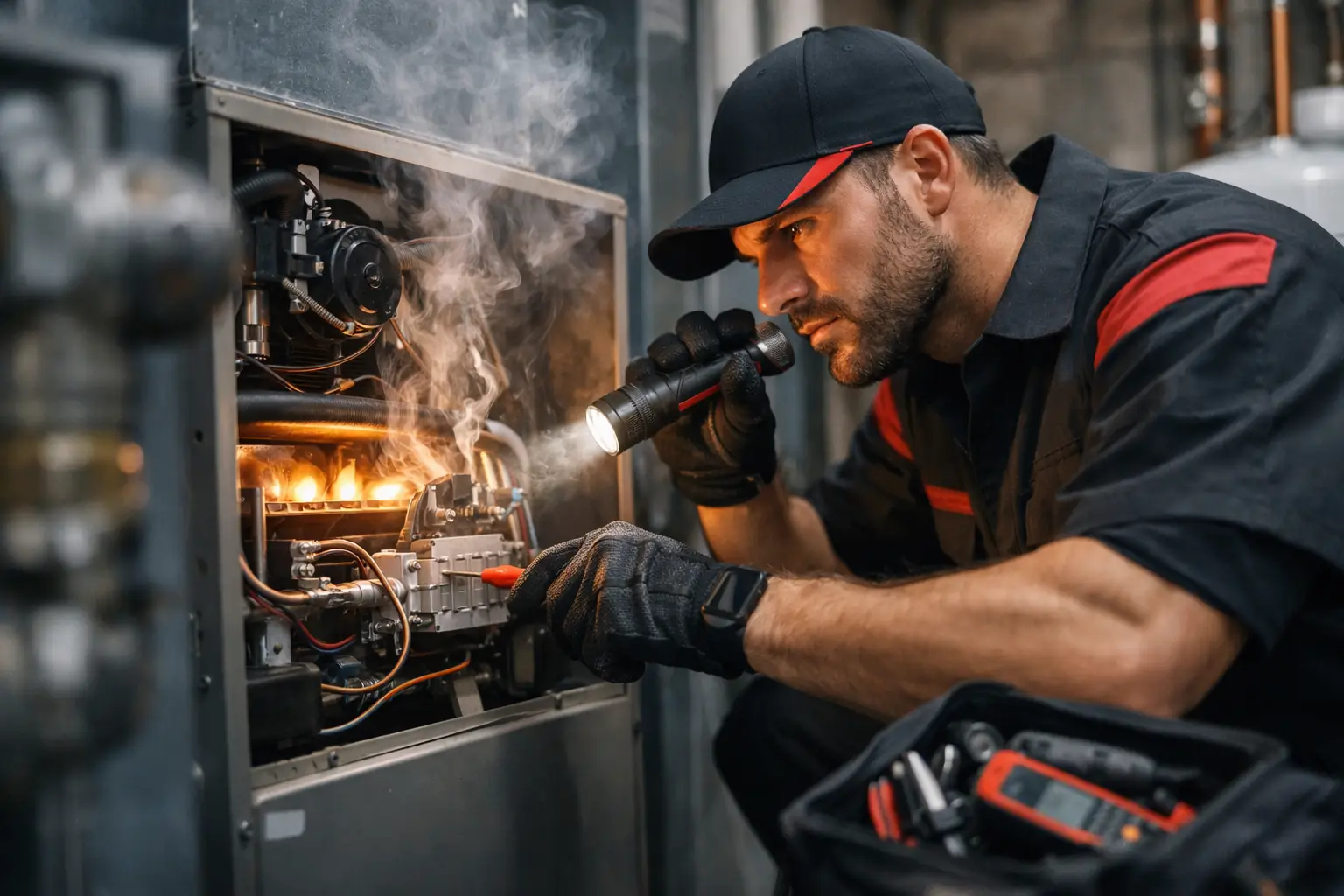
When you call for emergency service, speed matters, but so does process. A rushed guess is not the same as a proper diagnosis. Professional emergency furnace repair should start with confirming the issue, checking system safety, and identifying the root cause before any repair is recommended.
Fast dispatch and clear communication
A good emergency response starts with a realistic arrival window and direct communication. If the building is losing heat quickly, every hour counts. Same-day response is especially important for families with children, seniors, tenants, or temperature-sensitive commercial spaces.
Accurate diagnostics first
A licensed journeyman technician should inspect the furnace as a complete system, not just swap parts based on symptoms. That includes the controls, ignition sequence, blower operation, venting, airflow, and overall condition of the unit. Accurate diagnostics save time and reduce repeat breakdowns.
Repair recommendations with upfront pricing
Once the cause is identified, the next step should be clear. You should know what failed, what is required to restore heat, and whether the repair makes sense based on the furnace age and condition. Upfront pricing matters because emergency service should still be transparent.
Code-compliant workmanship
Furnaces involve gas, electrical components, venting, and combustion. Emergency work still has to be done correctly. Clean, code-compliant repair protects safety, system performance, and long-term reliability.
Repair or replace? It depends on the furnace
Not every emergency furnace repair should end in replacement, and not every repair is the right long-term decision. It depends on the age of the unit, the condition of major components, part availability, and whether the current issue is isolated or part of a pattern.
If the furnace is relatively modern and the failure is limited to one serviceable component, repair is often the practical option. If the unit is older, has frequent breakdowns, or shows multiple signs of wear, replacement may offer better reliability and lower operating risk.
This is where honest assessment matters. A technician should explain the trade-off clearly. The goal is not to push one option. The goal is to restore safe heat and help you make a decision that holds up beyond the next cold night.
Why licensed technicians matter in an emergency
During a no-heat call, it is easy to focus only on response time. Speed is critical, but qualifications matter just as much. Furnace issues can involve live electrical components, gas supply, combustion safety, venting, and control systems. A licensed journeyman technician brings the training needed to diagnose the actual fault and complete the repair without shortcuts.
That matters for residential systems and even more for commercial properties. A furnace problem in a business, multi-unit property, or mixed-use space can affect more than one area at once. Reliable service depends on a technician who can assess the system properly, work clean, and restore operation with minimal disruption.
How to reduce the chance of another emergency
The most effective way to reduce emergency calls is routine maintenance. That does not guarantee a furnace will never fail, but it lowers the odds of surprise breakdowns and helps catch wear before it affects heating performance.
A properly maintained furnace runs more efficiently, cycles more consistently, and gives technicians a chance to identify small issues before they become urgent service calls. For homes, that means better comfort and fewer disruptions. For commercial properties, it means better uptime and fewer after-hours failures.
If your furnace has already needed emergency repair once, that is also useful information. One breakdown does not automatically mean the system is finished, but repeated emergency calls usually point to a larger reliability problem. In that case, it makes sense to look at the full condition of the equipment instead of treating each new issue as separate.
Emergency furnace repair in Calgary and nearby areas
Cold weather puts heating systems under pressure across Calgary, Airdrie, Chestermere, Okotoks, and Cochrane. When a furnace fails during winter, waiting too long can lead to more than discomfort. Fast diagnosis and immediate repair available from licensed professionals helps restore heat before the problem spreads to other parts of the property.
Ranger Pros Heating & Cooling handles emergency service with a disciplined approach – fast dispatch, accurate diagnostics, code-compliant repairs, and clear pricing. That matters when the goal is not just to get the furnace running again, but to get it running reliably.
If your furnace is showing signs of failure, the best next step is straightforward. Do not wait for a total breakdown if the warning signs are already there. Prompt service gives you more control over the repair decision and a better chance of avoiding a longer, colder outage.